
Spiked but articulable edges
Dive Bar, Deborah Levy, late spring

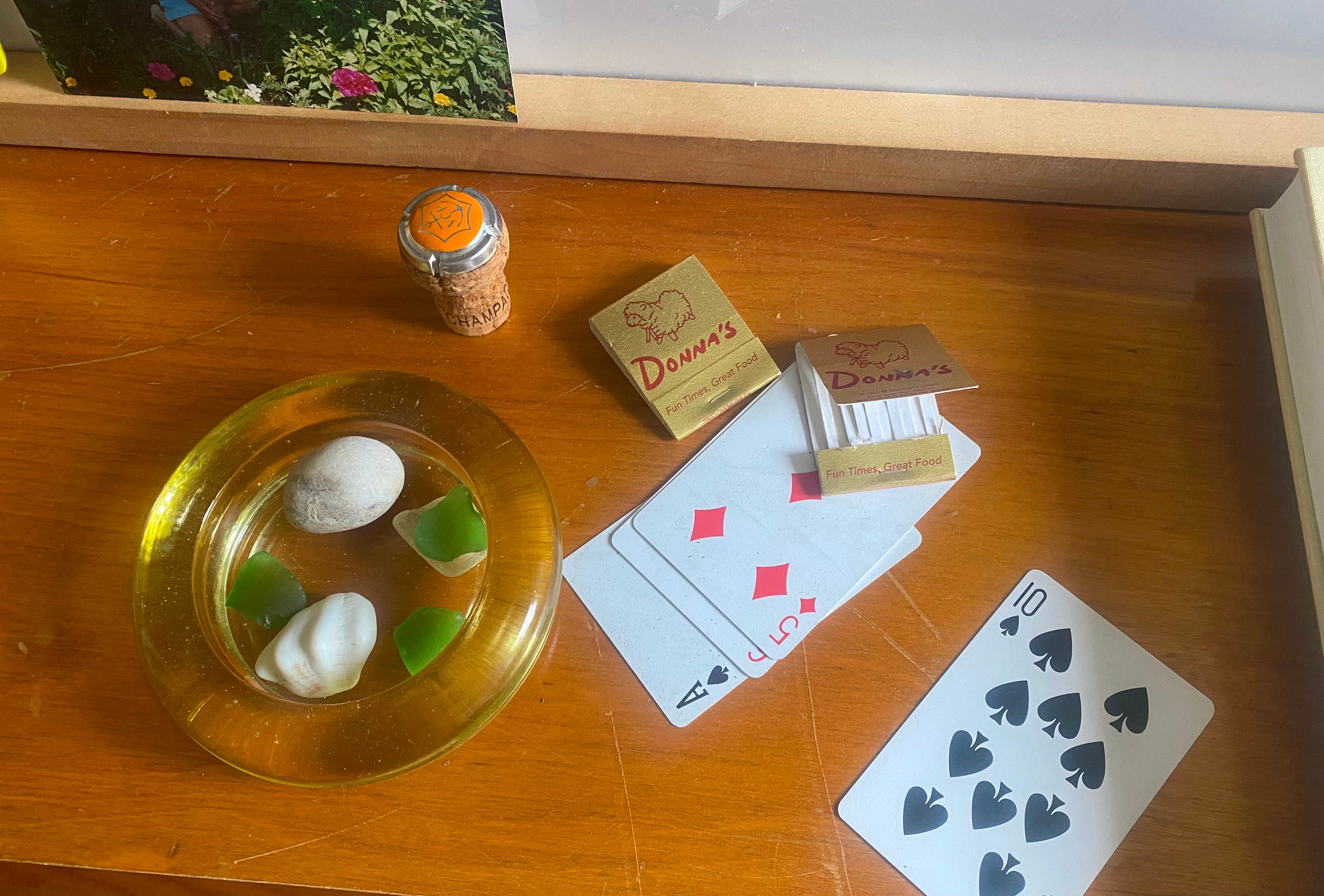
Last night I read my work aloud for the first time in some years–by my own volition I’ve ended up, with Pack Animal, much more often on the hosting side of the mic, and I liked being reminded what it was like on the other side, to not be the one holding the hot liquid of the night together in one’s hands, but rather being the substance that is managed and handled. Beloved Ally Shap put together a beautiful night on the back patio of Lucky Shrike where I read alongside friends I originally met through a shared interest in literature but who have thankfully far transcended that (Louis Sanger, Rosalind Sweeney-McCabe, Ariella Garmaise, Rachel Gerry; all of us reading new work next to one another, after having published pieces together in Dive Bar’s first issue). The night was a fundraiser for the second issue of Dive Bar; Ally brought in lilacs from her mother’s garden to put on each table, and we read under the green leafy tree that weaves its way through the open trellis of the ceiling.
I read a short excerpt from the novel that I’m working on right now, and why not, I’m putting it here, at the end of this spontaneous dispatch.
Larissa Pham also was in town and read from her book Discipline, which was exciting to me especially because in January I enjoyed spending an afternoon in conversation with her about her book and her body of work for Public Parking.
When I interviewed Fiona Duncan about her novel Exquisite Mariposa, a very formative book for me, in 2019, it was one of my first times interviewing a writer. (The very first time was when I interviewed Eimear McBride for a now-defunct Concordia literary website, and I most memorably recall that she told me it’s good to write while hungover because it makes you very vulnerable which is good for writing). I’d always admired the interviews that Fiona Duncan has conducted, and when I asked her about them, she told me that she considered interviewing and journalism to be a great secondary education instead of grad school. I think I’ve taken that to heart more than I even realized.
My secondary education has been interviewing, running Pack Animal, and now, Toronto Review. Last week was a full circle moment in all of that, because my interview with Deborah Levy came out in Toronto Review. Two years ago I had the opportunity to be put in touch with Levy to interview her (with the stipulation that it must be for a Canadian publication) for her book The Position of Spoons, but no Canadian publications were interested. I’ve joked with the other editors that all I had to do to be able to interview Levy was start a magazine. But it’s not entirely a joke–I think all six of us who have created TR together have our own personal versions of this, the pieces we really long to see written and published, and that’s our whole raison d’être.

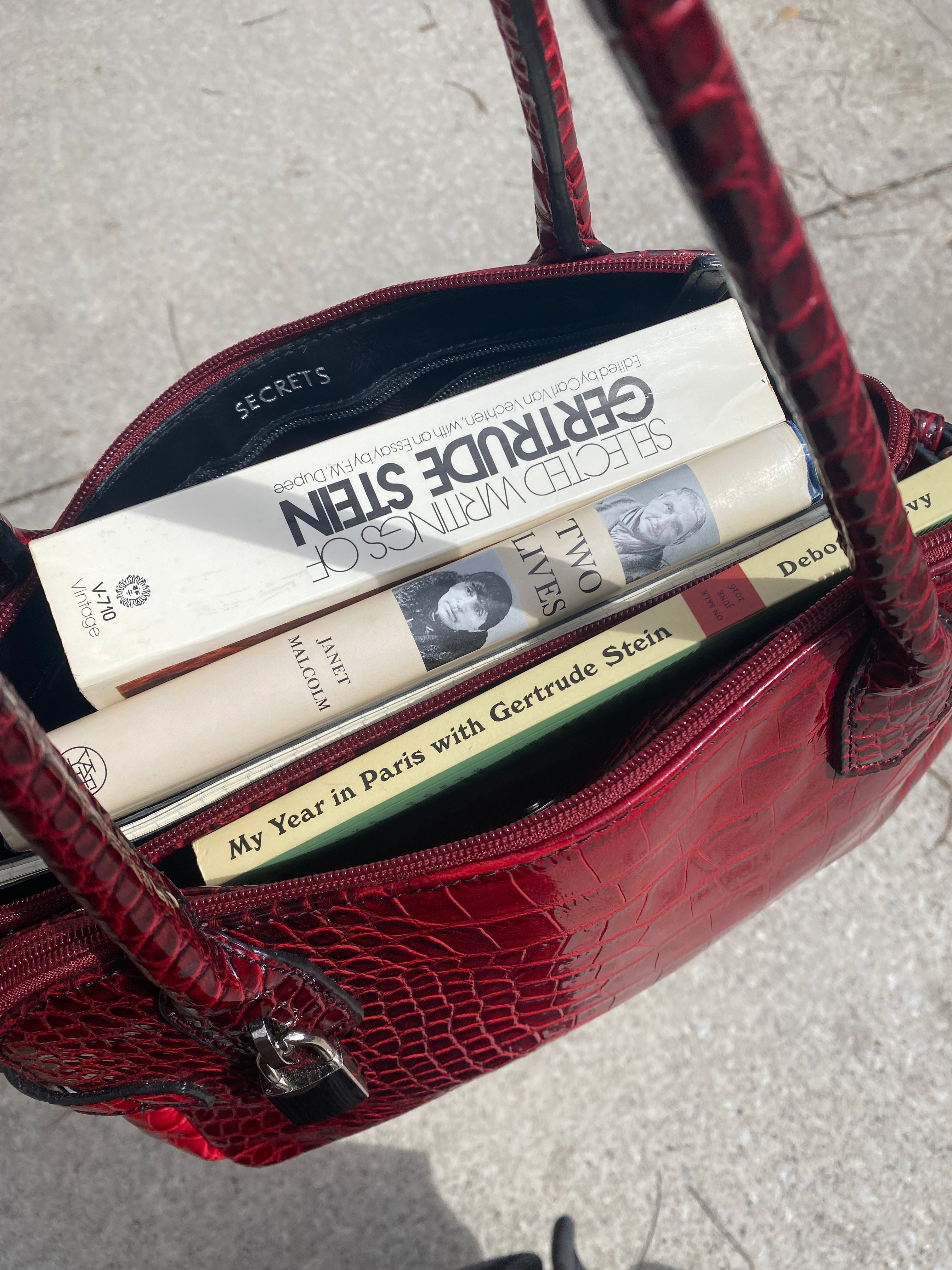
Video calling with Deborah was the first time I’ve been starstruck while interviewing. I held up a stack of my copies of her books and she said, “they look very well travelled.” In fact, I did read her for the first time in Paris in 2022, then in the mountains of Portugal in 2023, and most recently I read My Year in Paris with Gertrude Stein, for this interview, in Los Angeles in March. Both of the aforementioned readings I’ve written about in previous essays in this newsletter–all to say, this interview was a bit of wish fulfillment to me. To get to write the exact introduction I wanted to, about her, about Gertrude Stein, about Café Girls and Women, about becoming modern. It’s my favourite interview I’ve ever done.
Near the end of our call, I talked about the idea of Gertrude Stein ‘straddling her centuries,” and said that, as someone born at the tail end of the twentieth century, living at the beginning of the twenty-first, I feel that way, too, and she said, “I think that’s your book.”
From the still very early stages of, perhaps, that book, here’s what I read last night.
Previously, Clementine’s posts hadn’t been of much interest to Ila. There were literally hundreds of thousands of glamorous girls in this world, it was impossible to attach one’s own envy to each of them–there simply wasn’t the time, the mental or emotional capacity. It was possible, however, for all those girls to concentrate into a single pricked point. For the whole world of glamorous girls to collapse into one, into a girl you actually or tangentially knew, giving this one girl the heft and significance of all the others. This was what had happened for Ila’s friend and roommate, Helen. It was early in the morning, and Helen had just padded upstairs from the kitchen to Ila’s attic bedroom, coffee in hand as an apology or a thank you for letting her wake Ila up so early. Ila had accepted the coffee, rubbed her eyes, and then, as Helen crawled into her bed, received the thin onyx tablet of Helen’s phone to see the source of Helen’s distress.
Ila had been thinking about Helen and Clementine’s situation since last week, when she’d met Clementine while her and Helen were out dancing. The run-in had made an impact on Ila, especially because it was the first and only time she’d seen Helen act so stiff and scripted. That morning, in her bedroom, Ila didn’t look at the specifics of the images Helen was now trying to show her, and instead she took this as an opportunity to voice what she’d been mulling about Clementine since that night. Clementine, Ila felt, and said now to Helen, had become representative of all glamorous girls with more money, access, and therefore intrigue, than Helen possessed, and because Clementine had become, to Helen, all of these girls, rather than just herself, she had no weaknesses, and no edges. Any weakness or edges she actually possessed were covered by the strengths of the other girls she’d come to represent. Clementine had become, to Helen, a figmented deity.
“A checkpoint,” Ila said, “for you to measure yourself against.”
Helen drew Ila’s duvet up to her shoulders. Ila wondered if the bed smelt like her, like private sleep, but it didn’t seem to phase Helen.
And now, Ila understood, as Helen insisted she look through the saturated images on her phone, Clementine had gained even more power, because she had just attended a famous pop star’s wedding in Sicily. Helen put the duvet over her head as Ila looked through the scroll of images and videos of flouncy frilled minidresses and strappy heels dancing to local Sicilian musicians strumming on a cliffside. Then there was a gentle lavender sunrise breaking over the ocean as another famous musician DJ’d, and his notorious model girlfriend danced, sunglass-clad, cigarettes dripping from their mouths, to the rhythm of a 6am party morning. There was something elemental about it all, how many famous people were airdropped to this rugged, salty, mythic motif-scape. And somehow, there was Clementine, tanned and grinning in a deep aqua dress, alight with the vibrancy of being near a culturally sanctioned molten core. How had she arrived there?
“I’ve spent the whole night looking at this wedding from every angle available online. And there are a lot of angles.” Helen said, from under the duvet.
Ila was moved that Helen had brought this disturbance to her. Against all the better wishes for her untouchable fortitude, Ila did feel sickened looking at the smudged beauty of the videos and images. They were carefree, volcanic, eruptive, joyous, and glowing with the pleasure of knowingly operating from the agreed upon center. That was the idea she kept returning to. That the most distinct pleasure everyone was taking came from the relief of being, for once for certain, at the center.
During the depths of the winter, Ila had been partial to reading novels with plots that unfolded within the structure of strict social settings: Jane Austen and her Georgian era, Edith Wharton and her Gilded Age, and across the world, Anna Karenina in late Imperial Russia. There was a perverse comfort to be found for Ila in reading about a world so ordered and ruled, even though the conflict of the heroes and heroines came from those rules, from pressing at the edges of the structure they lived within, sometimes to tragic effects, sometimes to fatal ones, and life was restricting for everyone, especially women, let alone those forbidden access to the social ‘set’ altogether. What was it, then, that was comforting to her about these novels? Was it that, in the scope of these novels, life outside of the cushy social sets was hardly acknowledged, seemed not to exist, except as a looming threat (poverty, obscurity, danger) to keep the characters subsuming to the protocols of their day? Was it comforting to read of a real world that had once existed with its spiked but articulable edges?
And what was this edgeless world that she and Helen seemed to live in now? How could she ever possibly understand it in its totality? Reading this type of novel had been Ila’s way of returning to the comfort of the other side of the window, the spectator’s side, peering out at life. Because once you went to this edgeless side, the side where now she was once again, and so was Helen, there was no frame, there was less of a frame then ever, at least it seemed to her.
To observe this group of people at the wedding on this Grecian island on their phones was like peering into a well-defined society, the last of its kind. Maybe they could have found some pleasure, then, in their position here, in the bed, looking through the window into this world. They found they did not, when it came down to it, want to be spectators after all. But they couldn’t be in this particular story, the one they were looking at. So what were they to do?
Ila thought of Austen and Wharton and even Tolstoy, what their heroines were trying to achieve. What the arc was for them. It was romance, generally, a successful romance and a successful position of stature in their society, preferably both. Both was the happy ending of an Austen tale. But if they couldn’t have the former, they would generally be forced to settle for the latter. It was easy as a reader to wish for the heroines to choose romance every time, because romance was the option given for what seemed vital, against the grain, independent, headstrong, free. Stature meant less to Ila as a reader, because her interest was in reading about the pursuit of those vital qualities, and in the strictness of these societies, choosing real love meant choosing that subversive vitality. But now, in her real life beyond her spectator’s frame, it was almost the opposite. Choosing romance or marriage was regressive for women in the contemporary parlance, and choosing stature in your society was what made one independent and headstrong. The social mores had shifted dramatically. But what about striving for neither romance, nor stature? What about striving for those qualities Ila admired in a heroine, through the pursuit of truth? And also, what was truth? What on earth was truth?